Exploring medicinal plant diversity and traditional healthcare in Nador (Morocco) through ethnobotanical and pharmacological perspectives
Palabras clave:
Ethnobotany, Pharmacological properties, Medicinal plants, Traditional knowledge, Phytotherapy, Morocco, NadorResumen
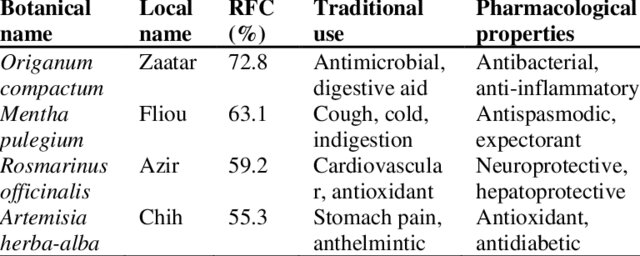
This study provides a comprehensive ethnopharmacological assessment of medicinal plants used in Nador, Morocco, documenting traditional knowledge from both urban and rural communities during the period from May 7 to November 28, 2024. A structured ethnobotanical survey was conducted among 103 informants including traditional healers, herbalists, and community elders using semi-structured questionnaires, field observations, and specimen collection. Quantitative indices such as relative frequency ofcitation (RFC), use value (UV), and informant consensus factor (ICF) were calculated to evaluate the cultural significance and therapeutic relevance of each species.A total of 38 medicinal plant species, representing 14 botanical families, were identified. Among these, the Lamiaceae family was predominant, accounting for 26.3% of the species, followed by Asteraceae (18.4%) and Apiaceae (13.2%). Notably, Origanum compactum exhibited the highest citation frequency (RFC = 72.8%), followed by Mentha pulegium (RFC = 63.1%). The Asteraceae and Apiaceae families were also well represented, with RFC values of 59.2% and 51.5%, respectively. Gastrointestinal disorders were the most frequently treated condition, accounting for 34.0% of all use reports (ICF = 0.81), while respiratory infections and dermatological conditions comprised 23.0% (ICF = 0.78) and 15.5% (ICF = 0.75) of the reported cases. Leaves were the most commonly usedplant part (58.2%), and infusion was the predominant method of preparation (43.7%).These findings emphasize the vital role of medicinal plants in Nador’s traditional healthcare system and underscore the necessity for further phytochemical and pharmacological research to elucidate their therapeutic potential. Moreover, they highlight the importance of sustainable conservation efforts to preserve these valuable botanical resources for future generations.
Descargas
Publicado
Número
Sección
Licencia
Derechos de autor 2025 CC BY-NC-ND 4.0

Esta obra está bajo una licencia internacional Creative Commons Atribución-NoComercial-SinDerivadas 4.0.
Moroccan Journal of Biological Sciences (MJBS) is an international, peer-reviewed, open-access scientific journal publishing original research articles, review articles, and short communications in biological, biomedical, environmental, and related life sciences. The journal provides free access to its published articles and charges no article processing fees.